A guitar may be the heart of your setup, but the right accessories are what truly shape your playing experience. Whether you’re practicing in your bedroom, recording at home, performing live, or simply learning your first chords, every guitarist needs a reliable toolkit to sound better, play comfortably, and protect their instrument.
From accurate tuning to proper maintenance, small accessories often make the biggest difference. Many beginners focus only on buying the guitar itself, but experienced musicians know that the supporting gear is equally important for tone, consistency, and long-term performance.
As the demand for quality instruments and music gear continues to rise in India, trusted brands like Yamaha and D’Addario have become essential names among guitarists looking for dependable performance and professional-grade accessories.
Discover the best guitar accessories every guitarist needs, such as tuners, capos, strings, straps, cables, & maintenance tools for better sound and performance.
Here’s a complete guide to the music accessories every guitarist should own.
Why These Accessories Matter
Every accessory contributes to a guitarist’s overall playing experience. Together, they help musicians:
- Maintain accurate tuning and sound quality
- Improve comfort and reduce fatigue
- Enhance technique and precision
- Protect valuable instruments
- Practice more efficiently
- Increase performance confidence
Even simple upgrades can create noticeable improvements in tone, reliability, and consistency.
1. Guitar Tuner
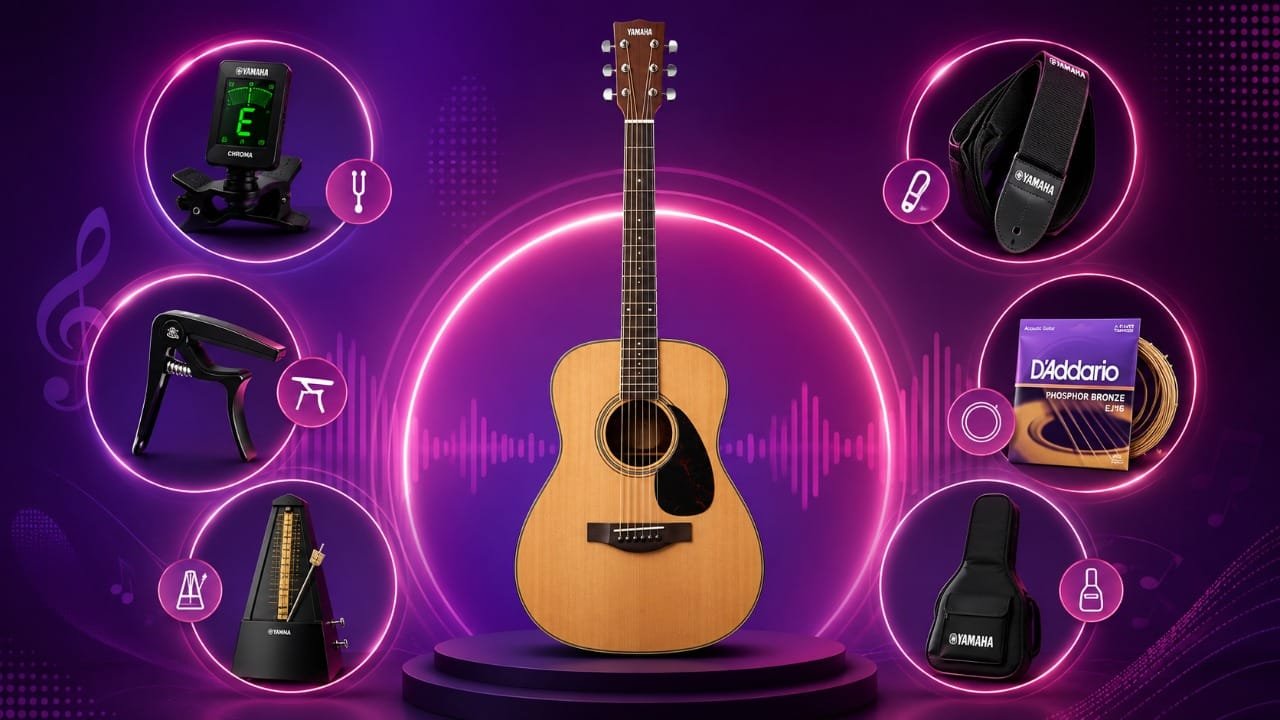
Nothing affects your performance faster than an out-of-tune guitar. Even the most expensive guitar will sound poor if the tuning is off. A quality guitar tuner ensures your instrument stays pitch-perfect and performance-ready at all times.
Clip-on tuners are highly popular because they detect vibration directly from the headstock, making them reliable even in noisy environments. Pedal tuners are widely used by live performers for fast and silent tuning on stage. Regular tuning also helps train your ear over time, improving your understanding of pitch and musical accuracy. For beginners especially, a tuner is not optional — it’s essential.
2. Capo
A capo may look simple, but it’s one of the most powerful tools a guitarist can own. It allows players to change keys instantly without learning new chord shapes. Acoustic guitarists rely heavily on capos for live performances and songwriting because they make difficult songs easier to play while preserving open chord resonance.
Beginners benefit because they can simplify challenging progressions, while advanced players use capos creatively to explore alternate voicings and textures. A well-built capo should apply even pressure across the fretboard to avoid buzzing or muted notes.
3. Guitar Strap
A good strap distributes the guitar’s weight across your shoulder evenly, helps you maintain good posture, and gives your fretting hand the freedom to move without the body of the guitar slipping. Look for one that’s adjustable across a wide range so it actually fits your body, and if you plan on long sessions, a padded strap will save your shoulder real strain over time. Strap locks are a wise addition for anything you’re performing with — the last thing you want is your guitar heading floorward mid-song.
4. Guitar Picks
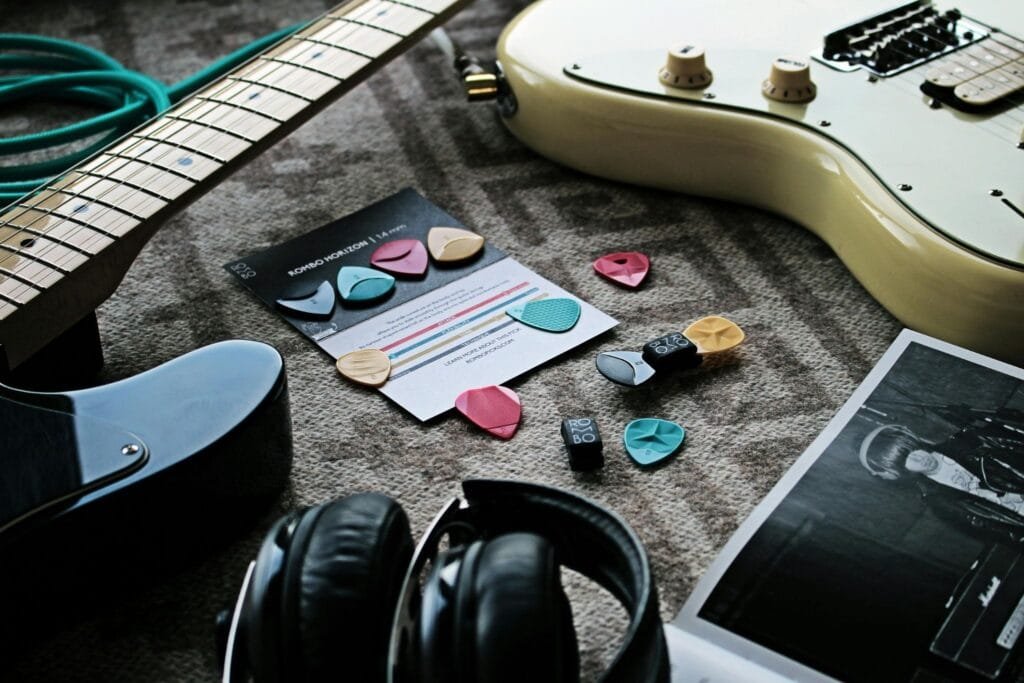
Guitar picks, also known as plectrums, directly influence tone, attack, and playing feel. Different pick materials and thicknesses produce noticeably different sounds. Thin picks are excellent for strumming and rhythm playing, while thicker picks provide greater precision for lead guitar, alternate picking, and solos.
Many players underestimate how much the right pick can improve control and comfort. Experimenting with different shapes and gauges can completely change your playing experience. Keeping extra picks is always recommended because they are easy to lose during practice sessions or performances.
5. Guitar Strings
Fresh strings are probably the single fastest way to improve how your guitar sounds today. Over time, strings collect sweat, oils, and tiny bits of skin (yes, really), which kills their resonance and makes them harder to intonate. When you put on a new set, especially a quality D’Addario set with the right gauge for your playing style the difference is immediate and almost impressive.
Different guitarists prefer different gauges and materials depending on their style:
- Lighter gauges for beginners and easier bending
- Heavier gauges for fuller tone and aggressive playing
- Coated strings for longer lifespan and corrosion resistance
Premium strings from brands like D’Addario are widely trusted because they offer consistent tone, durability, and reliable performance across genres. Aim to swap strings every one to three months depending on how often you play.
6. Guitar Stand
Leaving a guitar leaning against a wall or resting on furniture increases the risk of accidental damage. A guitar stand provides a safe and accessible place for your instrument. It encourages frequent practice by keeping the guitar within easy reach while protecting it from falls and scratches. Stable stands with secure neck support are ideal for home studios, practice rooms, and stage setups.
7. Gig Bag
Every guitarist who travels with their instrument needs reliable protection. Gig bags are lightweight, portable, and ideal for daily commuting or local rehearsals. Hard cases provide maximum protection against impact, temperature changes, and rough transportation. Quality storage solutions also shield guitars from dust and humidity fluctuations, preserving long-term condition and tuning stability.
8. Metronome
Timing is one of the most important skills any musician can develop, and a metronome remains one of the best tools for improving rhythm. Practicing with a metronome strengthens consistency, accuracy, speed control, and synchronization with other musicians. Beginners benefit from learning foundational rhythm patterns, while advanced players use metronomes to sharpen technical precision and tempo discipline. Consistent rhythm training ultimately creates cleaner, more confident performances.
9. Instrument Cable
For electric and electro-acoustic guitarists, a reliable instrument cable is absolutely essential. Low-quality cables often introduce unwanted hum, static noise, or signal loss, especially during performances. Durable, shielded cables deliver cleaner sound transmission and dependable connectivity. Investing in a quality cable ensures your amplifier receives the purest possible signal from your guitar, resulting in better tone and fewer interruptions.
10. String Winder
Though often overlooked, a string winder and guitar multi-tool make maintenance significantly easier. String winders speed up restringing during practice sessions or performances, while multi-tools help adjust truss rods, bridge saddles, and hardware quickly. These compact tools are especially useful during live gigs where quick adjustments can prevent performance interruptions.
11. Guitar Cleaning and Maintenance Kit
A guitar requires regular care to maintain both appearance and performance. Sweat, dust, and humidity can slowly damage strings, fretboards, and hardware over time. A standard maintenance kit usually includes:
- Microfiber cloth
- Guitar polish
- Fretboard conditioner
- String cleaner
Routine cleaning helps preserve finish quality, improves playability, and extends the lifespan of the instrument. Well-maintained guitars also retain better tuning stability and tonal clarity.
Where to Buy Premium Guitar Accessories
A great guitar setup is built through thoughtful choices, not just expensive equipment. The right accessories help guitarists perform better, protect their instruments, and enjoy the playing experience more fully.
Whether starting out or upgrading an existing setup, investing in essential guitar accessories creates long-term value for every musician. From maintaining tuning stability to improving rhythm and tone, these tools become the silent backbone behind every successful guitarist.
With trusted brands like Yamaha and D’Addario continuing to innovate in the musical accessories space, modern guitarists have access to professional-grade tools designed to support creativity, performance, and musical growth at every level.
Your perfect guitar story starts with the right gear — explore premium instruments online or walk into our showroom and feel the music come alive. Visit Yamaha Music Square Mumbai!
Frequently Asked Questions About Guitar Accessories
What accessories does every beginner guitarist need?
Every beginner guitarist should own a tuner, capo, guitar picks, strap, extra strings, gig bag, and a metronome. These accessories improve tuning accuracy, comfort, practice efficiency, and instrument protection.
How often should guitar strings be changed?
Most guitarists change strings every 1–3 months depending on playing frequency, sweat exposure, and string quality. Professional performers may replace them more often for consistent tone.
Are expensive guitar cables worth it?
Yes. High-quality instrument cables reduce signal loss, unwanted noise, and connection failures. Durable shielding improves sound clarity and reliability during performances.
Why is a metronome important for guitar practice?
A metronome helps develop timing, rhythm accuracy, tempo control, and consistency. It is essential for improving overall musicianship and playing confidently with others.
Which guitar pick thickness is best?
Thin picks are best for strumming and beginners, while thicker picks offer better control for lead guitar and fast picking techniques.
Is a hard case better than a gig bag?
Hard cases provide maximum protection during travel, while gig bags are lightweight and convenient for everyday carrying and short-distance transport.