Have you ever heard the deep, rhythmic beat of a drum that makes you want to tap your feet? Or maybe you have seen a drummer rock the stage, making powerful sounds that seem to make the world move. The drum is not only a musical instrument; it’s a language spoken by every culture, carrying stories, emotions, and power through sound. So, let’s dive into the captivating world of drums, where we will uncover the history of the drums, meet the inventor of the drum set, and explore different drum types. Let’s take a look

History of Drums: A Look Back in Time
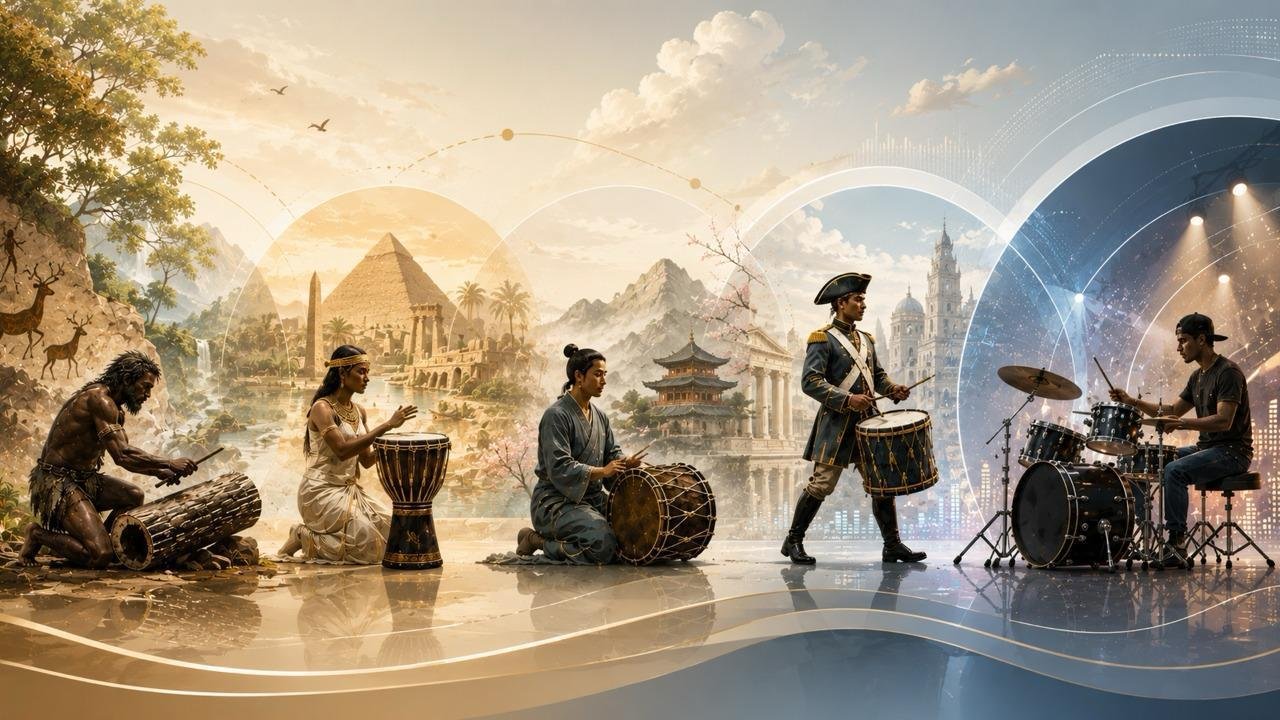
Drums have been found in archaeological sites around the world, revealing their presence in many ancient civilizations [ Meta Description]. For example, drum-like instruments have been discovered in caves in Peru dating back to 6,000 B.C. But drums weren’t just for making music, they were tools for communication, rituals, and celebration.
Drums were used in many different ways. They helped people in ancient civilizations communicate across long distances. The sound of a drum could be heard over miles, and it was often used to send messages. For example, in Africa and the Americas, drums were used to signal different events, like the start of a ceremony or a big battle. They were also an essential part of cultural rituals and celebrations. Each culture added its own touch to the drum, creating unique sounds and rhythms that connected people.
Over time, as people began to travel and trade, drum styles and techniques were shared and adapted. The drum’s role evolved as well, finding its place not only in ceremonies but also in entertainment and theater.
Who Invented the Drum Set?
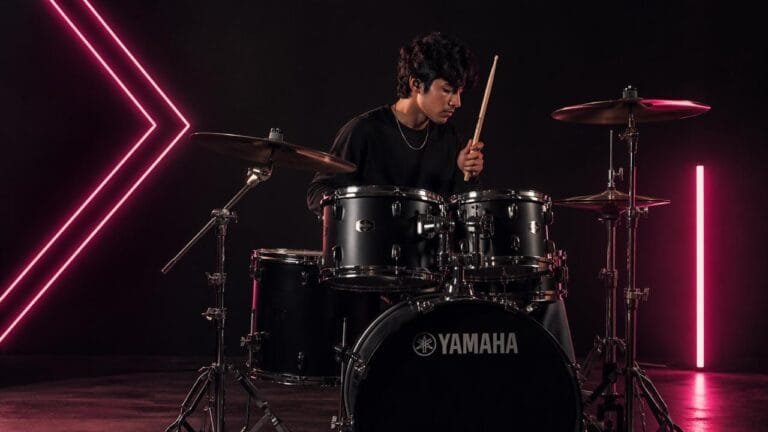
When it comes to the drum set (also called the drum kit), we need to jump ahead to the late 1800s and early 1900s. Until then, most drummers played only one type of drum in marching bands or orchestras. But as jazz music began to evolve, musicians wanted a new, more versatile way to produce rhythm.
A drummer named Dee Dee Chandler is credited with inventing one of the first “drum kits” around 1909. Chandler added a foot pedal to play the bass drum, allowing him to use his hands for other drums. This setup was revolutionary! Soon, drummers could play multiple drums and cymbals all by themselves.
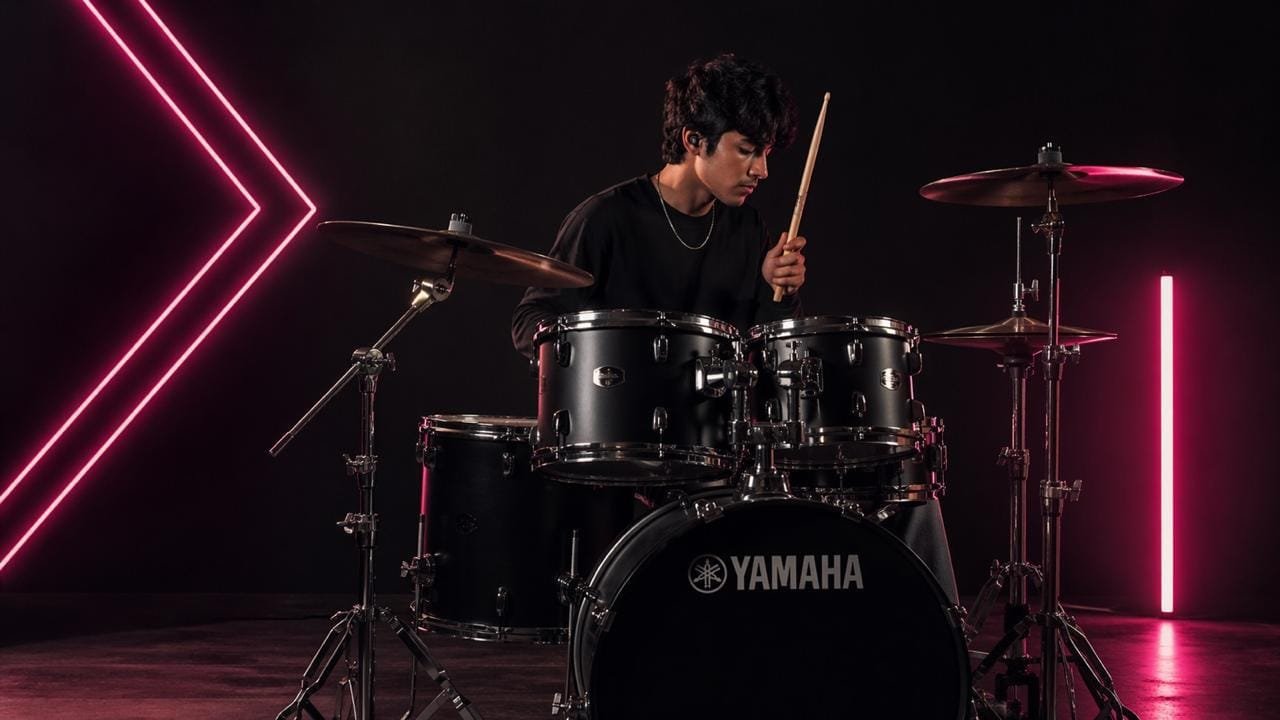
By the 1930s and 1940s, drum kits became more advanced and customizable, featuring snare drums, bass drums, cymbals, and tom-toms. Drum sets became the heartbeat of jazz, rock, and popular music, setting the foundation for today’s dynamic kits. This invention helped jazz become more dynamic and gave rock and roll its powerful backbone.
Different Types of Drums Around The World
Drums come in many shapes, sizes, and sounds, each with its own distinct character. Let’s look at some popular types of drums and how they’re played.
1. Snare Drum
The snare drum is a small, shallow drum with metal wires, called snares, stretched across its bottom head. When struck, the snares create a sharp, snappy sound, perfect for keeping rhythm in a band. Snare drums are used in everything from marching bands to rock bands, often producing the “crack” that keeps listeners’ feet tapping.
2. Bass Drum
Also known as the “kick drum,” the bass drum is the largest drum in a kit, producing a deep, booming sound. It’s played with a foot pedal and is typically the heartbeat of any song, providing a steady pulse. The bass drum is crucial in rock and pop music, where its “thump” helps set the foundation of a song’s groove.
3.Tom-Toms
Tom-toms, or “toms,” are cylindrical drums without snares, coming in a range of sizes for varied pitches. They add richness and variety to a drumbeat, often used in fills or dramatic sections of a song. You might hear toms in the rolling “drum fills” that create excitement before the chorus of a song.
4. Cymbals
While not exactly drums, cymbals are an essential part of a drum set. They come in different types, like crash cymbals (for loud, impactful sounds), ride cymbals (for a steady, continuous beat), and hi-hats (two cymbals that can be closed or opened for different sounds). Cymbals add brightness and sparkle to a drum kit, balancing out the deep tones of drums with a high-pitched “shimmer.”
5. Hand Drums
Beyond drum kits, there are countless types of hand drums used worldwide. Some of the most well-known include:
- Conga Drums : A tall, narrow drum from Afro-Cuban music played with the hands.
- Djembe Drums : A goblet-shaped drum from West Africa, also played with the hands, creating a wide range of tones.
- Bongos Drums : Small, paired drums that make sharp, bright sounds, common in Latin music.
Each of these hand drums brings a distinct sound and cultural flavor, showing just how diverse the world of drums really is.
Conclusion : Explore Premium Drum Instruments with Gretex
From ancient times to modern-day concerts, drums have played an essential role in shaping the music we love today. They’re the heartbeat of every song, the pulse that keeps everything moving. Now that you know a bit about the history of drums, why not give it a try? Whether you’re interested in learning the basics of drumming or exploring different types of drums, there’s a whole world of beats waiting for you.
Gretex is here to help you with top-quality drum equipment and accessories. Don’t just play the drums – feel the rhythm and let it take you on a journey. Get in touch with us today to find the perfect drum set for your musical adventure!
FAQs About Drums
1. How does a drum work?
A drum works when its surface, called the drumhead, vibrates after being struck by sticks, hands, or pedals. These vibrations create sound waves that produce different tones and rhythms. Larger drums create deeper sounds, while smaller drums produce sharper tones. Modern drum kits combine multiple drums and cymbals to create complete rhythmic patterns used in rock, pop, jazz, and many other music styles.
2. Is a drum a percussion instrument?
Yes, drums are percussion instruments because they create sound when struck, shaken, or hit. Percussion instruments are one of the oldest musical instrument families in the world. Drums are used in nearly every music genre, including classical, rock, jazz, folk, worship music, and marching bands. They help maintain rhythm, timing, and energy in music performances
3. Which Yamaha drums are best for beginners?
Some of the best beginner-friendly Yamaha drum kits include the Yamaha Rydeen Drum Kit, Yamaha Stage Custom Birch, and Yamaha DTX402 Electronic Drum Kit. These models are popular because they offer great sound quality, durability, easy setup, and comfortable playability for new learners. Electronic kits are especially helpful for practicing quietly at home.
4. Are electronic drums good for learning?
Yes, electronic drums are excellent for beginners because they allow quiet practice using headphones, include built-in learning features, and require less space. Many electronic drum kits also provide training modes, metronomes, and different sound options. Beginner drummers often choose electronic kits for home practice without disturbing others.